
Criminal Cases in DeWitt County Courts
The DeWitt County Courthouse houses the Circuit Court of the Sixth Judicial Circuit at 201 West Washington Street in Clinton. Illinois circuit courts have original jurisdiction, so the local division handles felonies, misdemeanors, traffic matters, and ordinance cases. Clinton, Farmer City, and other municipalities do not maintain a separate constitutional municipal criminal court repository. A city may initiate an ordinance matter, but a filed prosecution moves through the DeWitt Circuit Court structure.
The Circuit Clerk keeps the court file. The clerk records parties, counts, hearings, orders, dispositions, sentences, and public financial entries. The State's Attorney decides what charges to file. That distinction matters because the charge alleged at arrest can change before a case reaches the clerk. The Sixth Judicial Circuit supplies circuit context, while the clerk remains the source for an authoritative DeWitt County criminal case document.
The official court directory provides the source view of the local court:
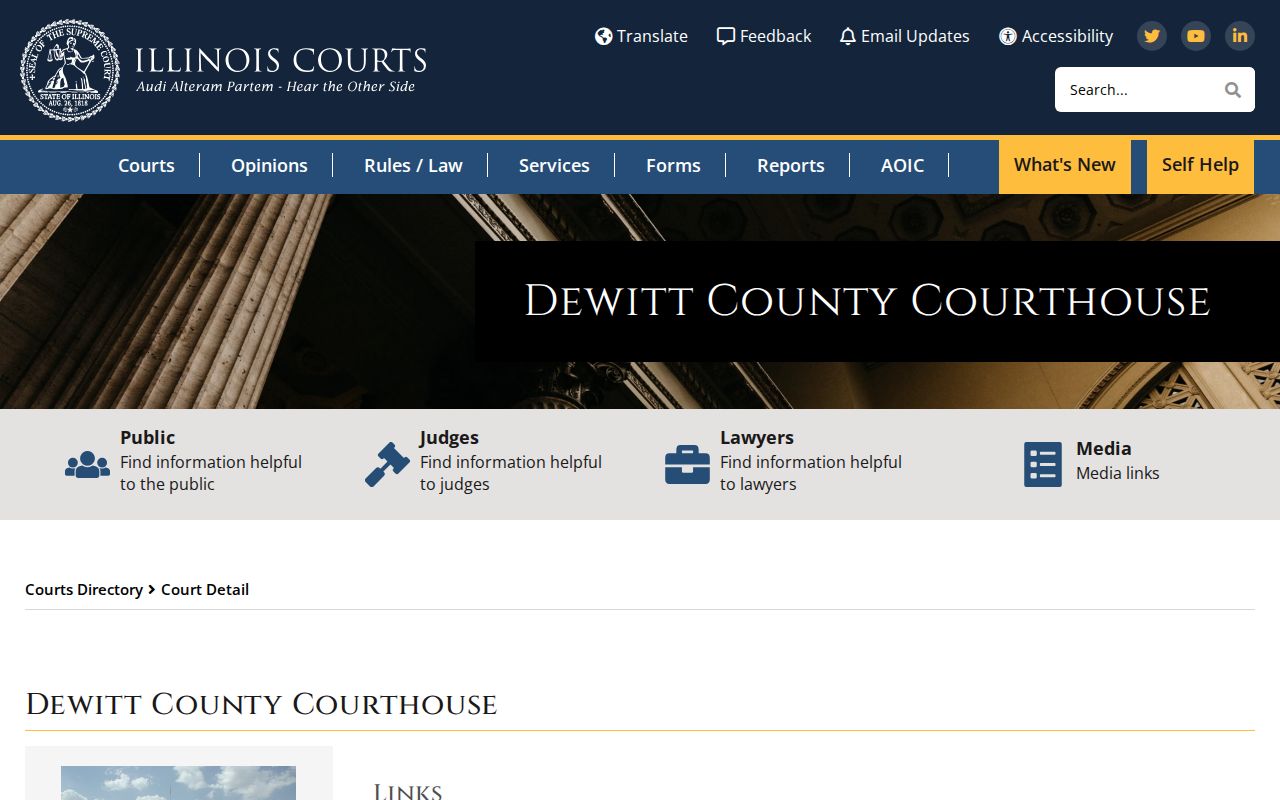
That directory is the current reference for courthouse contacts and public access details.
DeWitt Criminal Cases in Sixth Circuit
DeWitt is one county within Illinois's Sixth Judicial Circuit. The circuit framework explains why local court resources can appear on both county-specific and circuit-wide pages. It does not merge DeWitt criminal case records with another county's docket. Confirm the county before relying on a result. The case number, filing county, and party names should all point to DeWitt.
The circuit's official site shows the shared judicial structure:
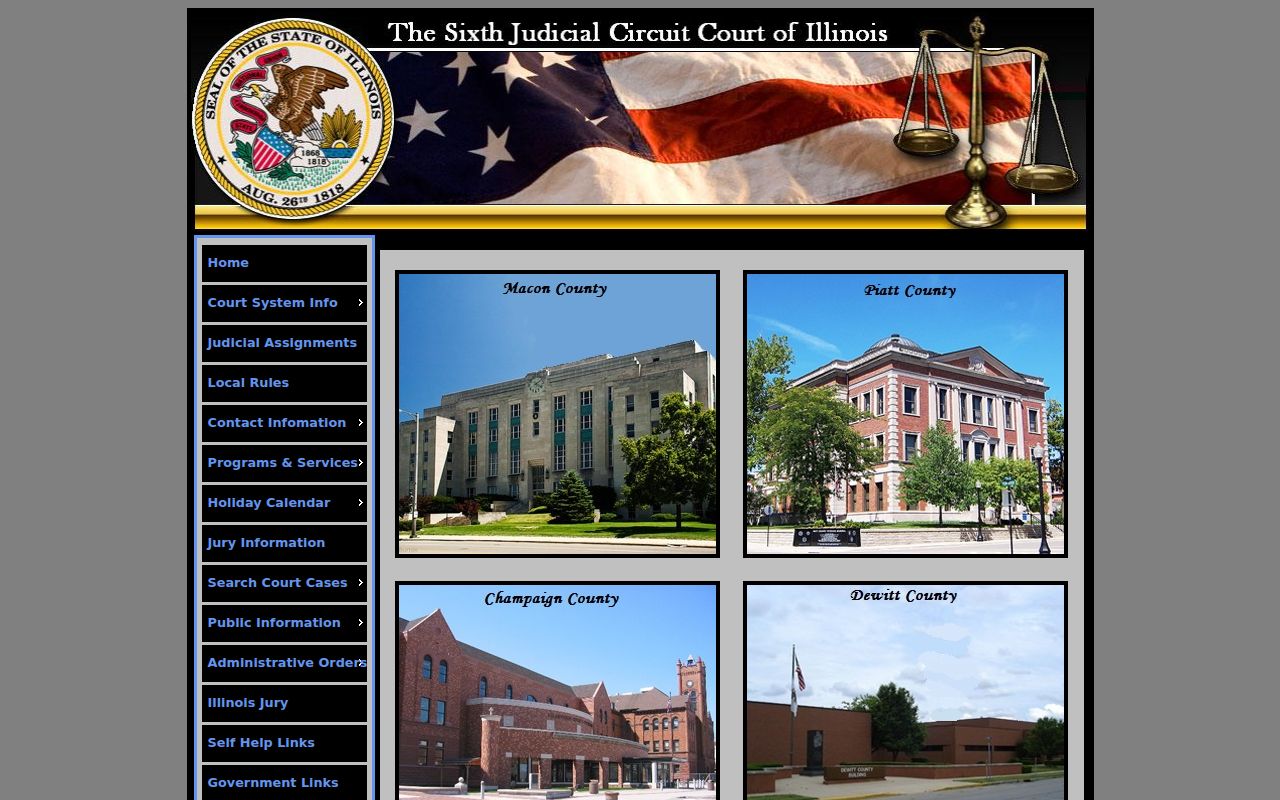
Use it for circuit information, then return to the DeWitt search or clerk for the actual local case.
How to Search Case Records
Judici's direct DeWitt court search is the practical remote starting point. It supports separate name and case-number paths. A complete case number is best. When searching by name, use the legal surname and add the given or middle name to narrow common results. Search controls can change, and some document images or premium functions may require payment.
- Open the DeWitt direct search and confirm court code IL020015J.
- Enter the exact case number, or search by surname and given name.
- Separate similar results by case type, filing year, and party details.
- Open the docket and read every count and event in date order.
- Ask the Circuit Clerk for copies, certification, or archived material.
| Field Label | Type | Required | Notes |
|---|---|---|---|
| Court/County | Dropdown | Yes | Choose DeWitt; the direct link preselects it. |
| Last Name | Text | For name search | Use the legal surname. |
| First Name | Text | Optional | Narrows a name result. |
| Middle Name | Text | Optional | Useful for common names. |
| Case Number | Text | Alternative | Keep the format shown by the clerk. |
The manifest capture shows the DeWitt Judici entry:
It is an index and docket tool, not a promise that every document or restricted matter appears.
When DeWitt Judici Is Not Enough
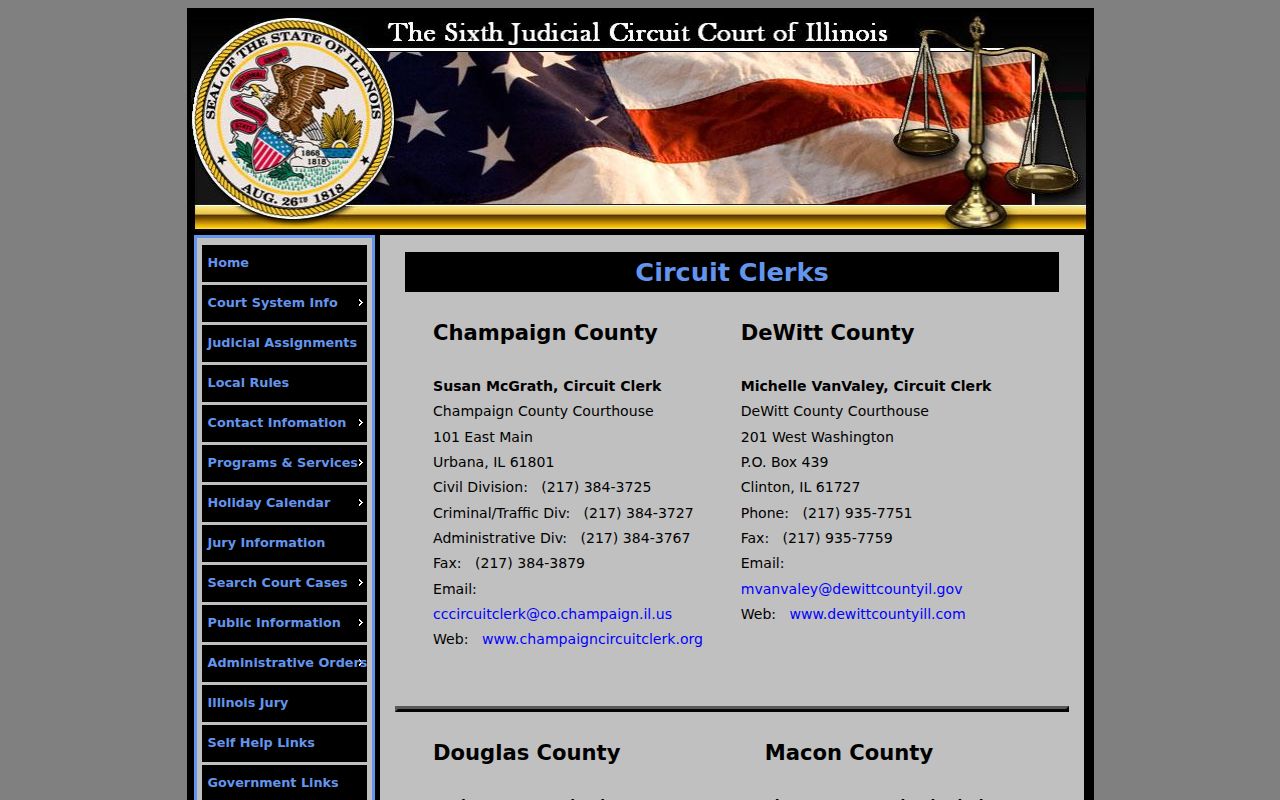
Contact the Circuit Clerk at 201 West Washington Street, Clinton, IL 61727, when a DeWitt criminal case needs a filed complaint, order, judgment, or certified copy. Published clerk numbers are 217-935-7750 and 217-935-7761. The counter is also the route for older or archived cases and questions about document availability. Ask for the current cost and process because the research did not establish a fixed DeWitt copy or certification fee.
The Sixth Circuit clerk directory confirms the local routing:
A certified copy carries the clerk's authentication. A plain screen print does not serve the same role.
DeWitt Circuit Clerk
201 W. Washington Street
Clinton, IL 61727
217-935-7750 or 217-935-7761
8:30 a.m. to 4:30 p.m.
What the Case File Shows
A DeWitt County criminal case file follows the prosecution. Read the counts one by one. Each count may have its own statute, status, and disposition, so a case-level label can hide a dismissal or amendment. Docket entries form the dated register of filings and court events. They may describe a document even when its image is unavailable online.
| Case Number & Court | Identifies the DeWitt filing, division, and case type. |
|---|---|
| Charging Document | States the formal counts pursued by the prosecutor. |
| Docket Entries | List filings, appearances, motions, pleas, orders, and review events. |
| Hearing Dates | Show scheduled event time, courtroom, and judge when public. |
| Disposition & Judgment | Explain how each count ended and whether guilt was entered. |
| Sentence & Conditions | Record the court-ordered result, costs, and supervision details. |
Private identifiers, protected victim or minor data, sealed matters, and expunged records do not belong in the ordinary public display. Financial assessments may appear, but a balance is not a substitute for the judgment or sentence.
DeWitt Pretrial Services and Detention
Current Illinois criminal cases no longer use a routine cash-bail schedule. Under the Pretrial Fairness Act, detention depends on statutory eligibility, a petition, a hearing, and judicial findings. Older DeWitt dockets can still contain cash-bond terms. Readers should interpret that wording in the time period of the case instead of applying an old bond entry to current practice.
The Office of Statewide Pretrial Services listing for DeWitt documents the local service point:
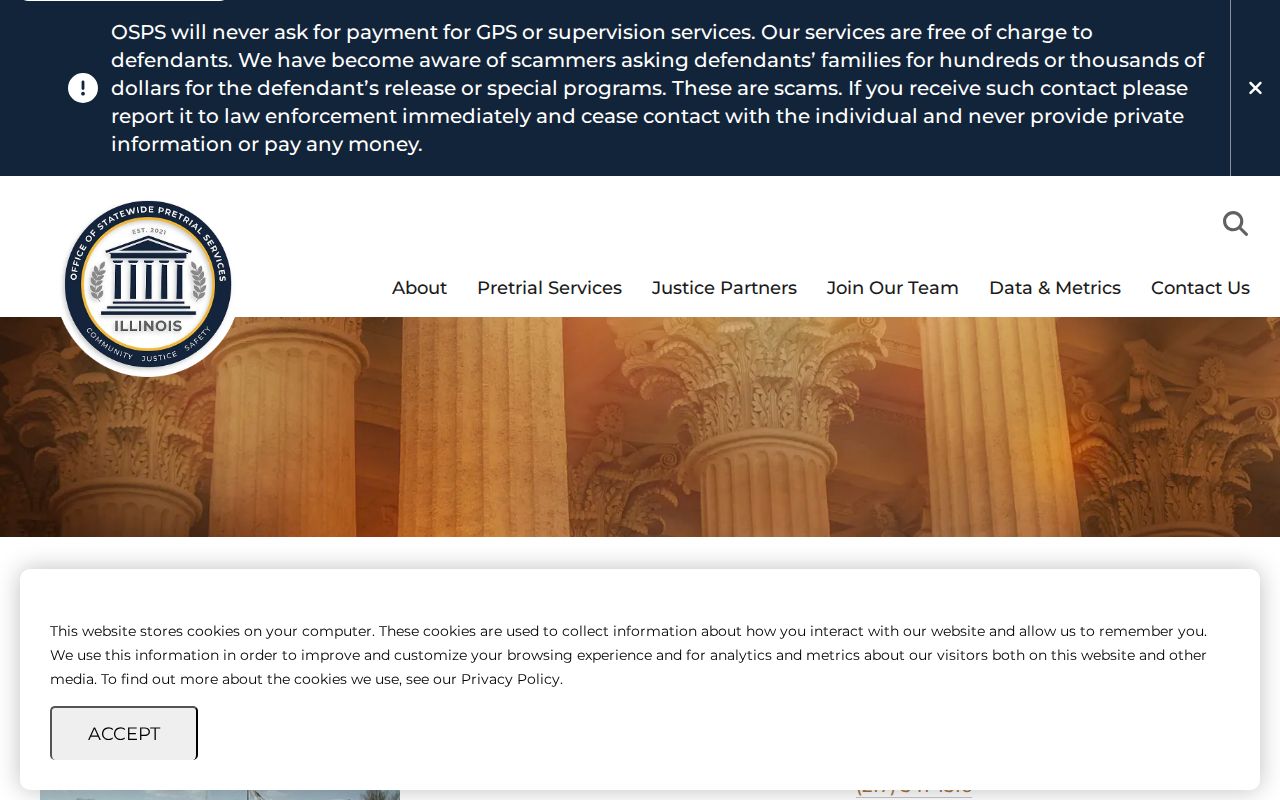
Pretrial services and the Circuit Clerk have different jobs. The clerk maintains the court record; pretrial staff serve the court's release and supervision process.
Stages of a Criminal Case
A DeWitt criminal matter may begin with arrest or summons. A prompt first appearance addresses custody, counsel, and release. The prosecutor then files a complaint or information, or seeks an indictment where applicable. Arraignment addresses the charge and plea. Discovery, motions, negotiation, or trial follow. Judgment and sentence come only after a guilty plea or finding. Appeals and post-conviction filings may add later docket events.
Case flow: Arrest or summons › First appearance › Filing or indictment › Arraignment › Plea or trial › Disposition › Sentence
People who need appointed-counsel contact information can consult the official Illinois public defender directory:
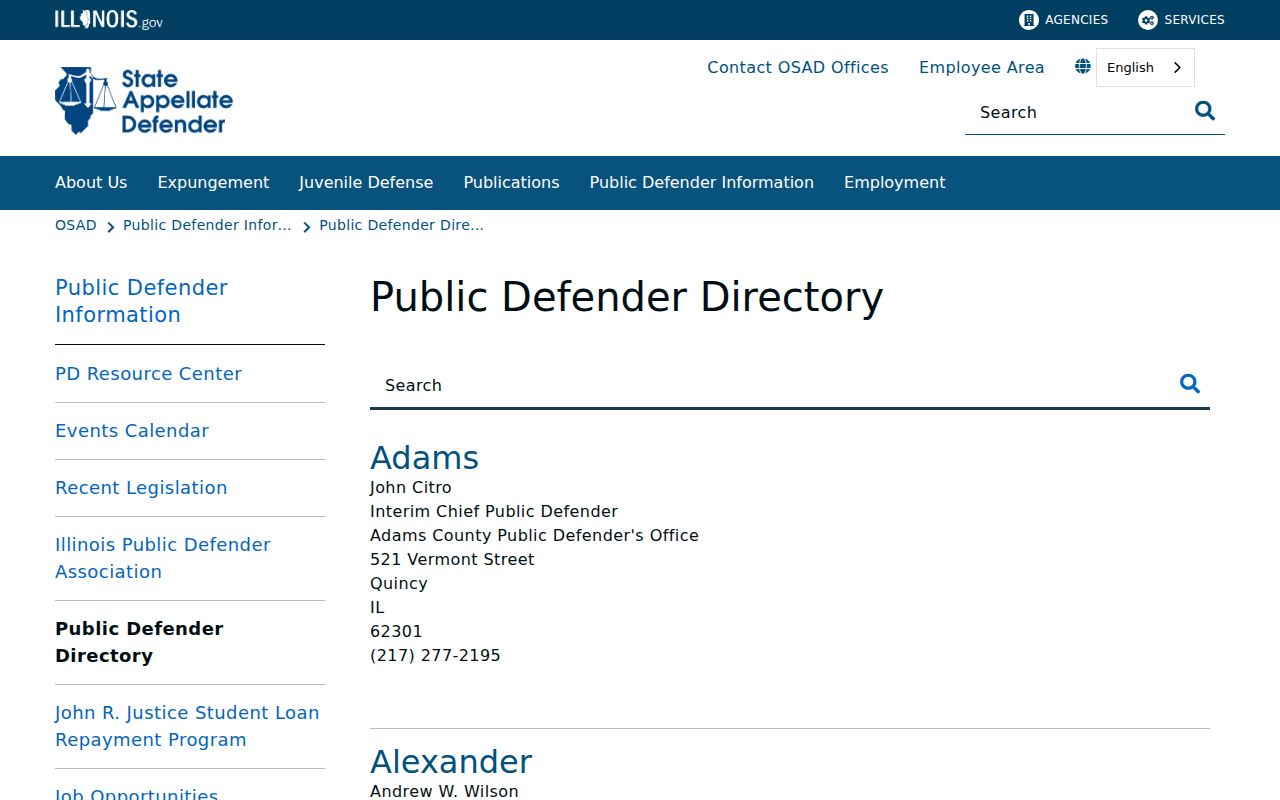
The directory is a contact resource. Attorney appearances in a specific matter should still be checked in that DeWitt docket.
Read Each DeWitt Criminal Count
An arrest allegation is not the final court charge. Open each count and note its current description, statutory citation, classification, status, and outcome. A count can be amended, dismissed, resolved by plea, or tried. “Disposition” means the way a charge ended. “Nolle prosequi” means the prosecutor formally chose not to proceed on that charge at that time. “Acquittal” means a not-guilty result after adjudication.
- Docket
- The dated register of filings and court events.
- Count
- One separately alleged offense in the charging document.
- Disposition
- The recorded outcome of a count or case.
- Certified copy
- A clerk-authenticated reproduction of the court record.
This count-level review prevents a first allegation from being repeated as though it were the final DeWitt County criminal court result. Also check events entered after the first judgment. A sentence can be followed by review dates, amended orders, an appeal, or post-conviction filings. Financial entries may continue after the criminal outcome, but they do not change the meaning of a dismissal or acquittal. When a docket label is unclear, ask the DeWitt Circuit Clerk for the underlying public order instead of guessing from an abbreviation. Record the date and count number with the outcome so that details from separate charges are not combined.
Archived DeWitt Criminal Dockets
An old DeWitt criminal case may require more than a modern name search. Start with the Circuit Clerk because that office can say whether the file remains locally available, has moved to storage, or falls outside the remote index. Give the name as it appeared at the time, an approximate year, the case number if known, and the kind of document needed. Do not assume a blank Judici result means no historical case exists.
The Illinois Regional Archives Depository description for DeWitt County is another official route for historical research. IRAD holdings and date ranges are collection-specific, so check the inventory before making a request. The DeWitt-area repository is at Illinois State University in Normal. Recent prosecutions and certified current court documents still belong with the Circuit Clerk.
Historical indexes can use older spelling, handwritten entries, or a form of case numbering that differs from today's portal. Search broad enough to locate the entry, then use the clerk or archival finding aid to confirm that the record concerns the right person and matter.
A sound archival request separates an index entry from the document behind it. Ask whether the listed material contains a docket, information, order, judgment, or another record series. State whether an ordinary research copy will work or whether the purpose requires clerk certification. IRAD is useful for transferred historical holdings, but it does not replace the DeWitt Circuit Clerk's authority over the current court record. If both offices hold related material, compare the case number, party name, and year before deciding that the files describe the same prosecution.
Access & Restrictions
Public access does not mean every DeWitt criminal case detail is online. Sealed and expunged matters, confidential juvenile records, private identifiers, and protected victim information can be withheld. “Impounded” means ordinary public inspection is blocked by rule or order. Illinois court-access policy governs the docket, while the Illinois Freedom of Information Act applies to nonexempt agency records. FOIA does not override a court seal.
Unserved active DeWitt warrants are not displayed on Judici under the local sheriff's published explanation of Illinois court rules. Their absence is not proof that none exists. After service, related information may appear. If a known case is missing, verify the county and spelling, then ask the clerk whether it is archived, impounded, sealed, or otherwise outside the public index.